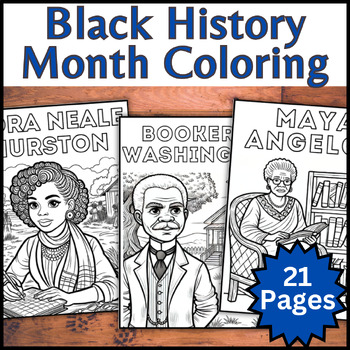
A portrait becomes much more interesting when children know something about the person looking back at them. A short read-aloud before coloring gives the activity a clear purpose and plenty to talk about.
Choose the person before the page
The 21 Black History Month Coloring Pages from Use The Village include named portraits of people connected with literature, science, civil rights, music, and sports. These are portrait coloring pages. Plan to bring in an age-appropriate biography or other reliable source for the history lesson.
See 21 Black History Month Coloring Pages and the product preview.
Read, talk, then reach for the crayons
Choose one person whose work connects with your class reading. Pause to ask what the person did, what children found interesting, and what they still wonder. Then offer the matching portrait. Students who need more processing time can listen and color before joining the conversation.
Add a caption in the child’s own words
Give each student a separate strip of paper. Younger children can dictate one thing they learned. Older children can write two sentences explaining an achievement and why it matters. Keep the book nearby so students can check names and details. A copied quotation needs quotation marks and its source; a student summary should sound like the student.
Make a display you can keep using
Place the portraits beside the captions and the books that informed them. Invite children to find a connection between two people as your collection grows. A few thoughtfully introduced portraits work beautifully for this routine. Continue adding to the display when people’s lives connect with your curriculum throughout the year.
Another idea to try
Black History Activities That Keep Students Talking About the Reading