Ask for “more expression,” and some children turn the volume up to playground. They are certainly committed. They may just need a clearer idea of what expression sounds like.
This readers theater practice focuses on one small stretch of dialogue. Children try a voice, explain their choice, and listen for whether the meaning comes through. You can do the whole routine without a stage or a costume bin.
Choose a short exchange everyone can understand
I like the options in Bees On Strike! from Use The Village for this kind of practice. The grades 2–5 resource includes a six-page script, a character list, comprehension work, character pictures, teacher suggestions, and extension activities in a 28-page PDF.
Preview the script and select a brief exchange that suits your readers. Explain unfamiliar words and read the surrounding section so children know what is happening. For younger listeners, an adult or older reading buddy can carry the text while they discuss how a character might sound.
Model two ways to read one line
Read the same line twice, changing your pace, pauses, or emphasis. Ask, “Which version fits what is happening? What clue helped you decide?” Accept different choices when children can explain them from the scene.
Keep the directions concrete: pause at the punctuation, make the important word easy to hear, and use a voice your partner can comfortably listen to. One focus at a time is plenty.
Give partners a listening job
One child reads a few lines while the other follows along. The listener finishes one sentence:
- “I heard you pause after…”
- “The word you made stand out was…”
- “Your voice made the character sound…”
Switch roles, then reread once using the feedback. A child who needs support can echo an adult or read alongside a partner. Keep the script in hand so remembering the words does not become a second assignment.
Finish with a tiny performance
Invite a willing pair to share their exchange with another pair. Ask the audience what they understood about the characters. A thoughtful pause deserves attention just as much as a big dramatic voice.
Return to the same excerpt another day and listen for one change. If you want to build toward a longer class reading, this simple readers theater weekly plan gives the practice a place in your schedule. For today, a few lines read with intention are a satisfying finish.
A resource for this activity
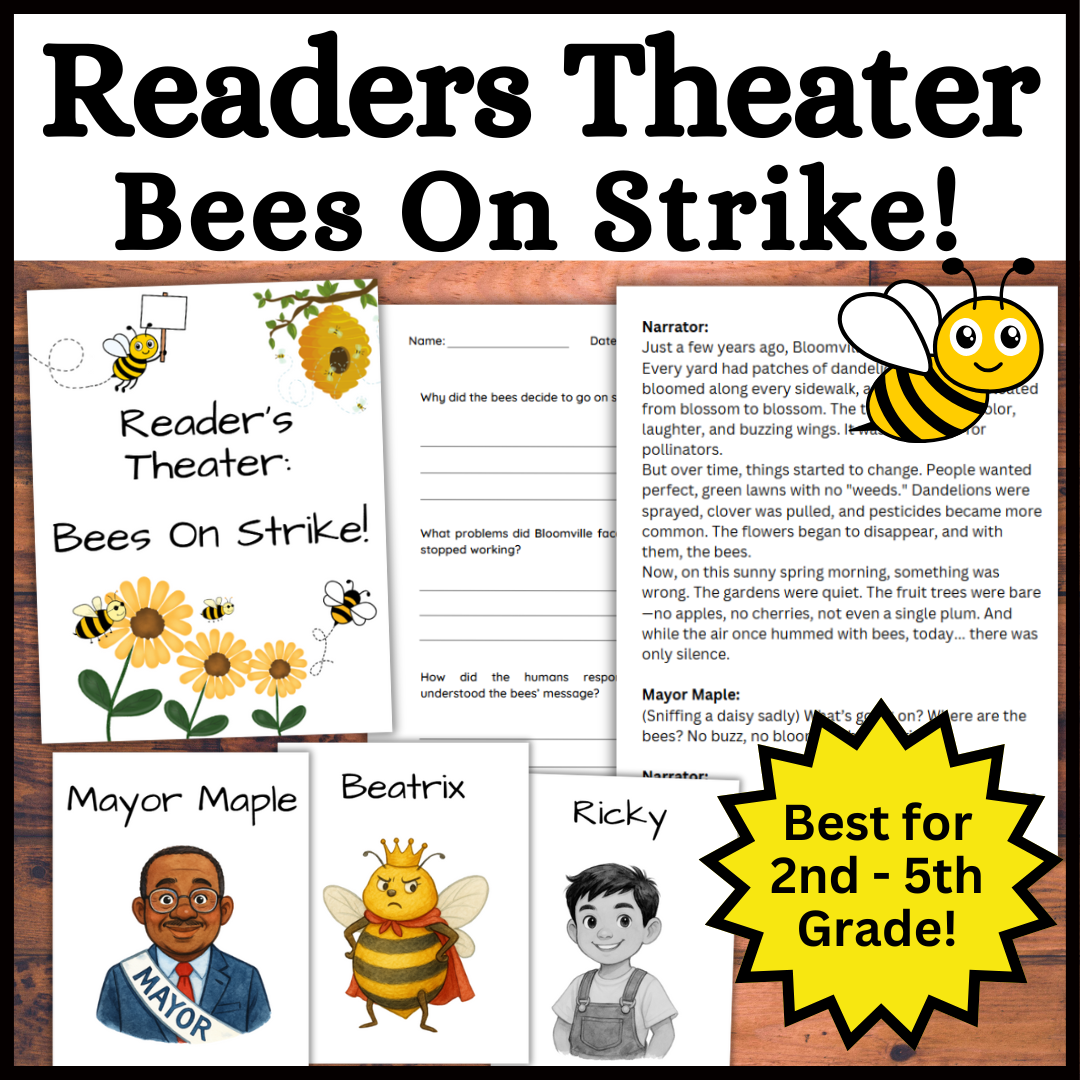
Bees On Strike! Readers Theater
A grades 2–5 script with supporting activities. Choose a short excerpt for focused expression practice.