A hallway display can give students a reason to pause, read, and ask a question. The trick is giving them something specific to do when they get there.
Start with a small portrait gallery
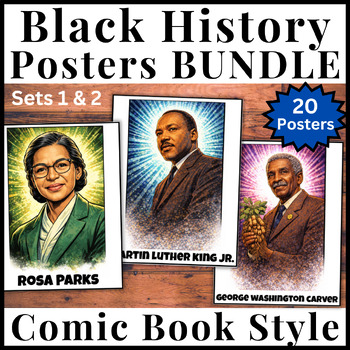
The 20 Black History Month Comic-Style Portrait Posters Bundle from Use The Village offers colorful portraits in two sets of ten. It also includes a Madam C. J. Walker coloring page. For a first gallery walk, choose four or five posters connected to people your class is studying.
See 20 Black History Month Comic-Style Portrait Posters Bundle and the product preview.
Add the context children need
Place a short, readable caption beside each selected portrait. Write the captions from reliable biographies or museum sources, or develop them together after a read-aloud. Include the person’s name, a specific contribution, and enough context for students to understand it. The portraits provide the display; your chosen texts provide the learning content.
Give partners one question
Try ‘What did you learn that you could explain to a friend?’ Let partners visit a few portraits, talk quietly, and record a detail on scrap paper. Younger children can point to a poster and explain their choice to an adult. Avoid asking students to guess a person’s character or achievements from appearance.
Return to the gallery
Gather for a short conversation about connections and unanswered questions. Leave space for a ‘We want to know’ note near each portrait, then use those notes to plan another read-aloud. Rotate the display as your lessons change. Having the full poster collection together makes those swaps easier, while the small number on display keeps the first visit manageable.
Another idea to try
Black History Activities That Keep Students Talking About the Reading