Ask a room full of children how they feel and you may hear “good” a dozen times. Having a few more words available can help the conversation along. A picture, a made-up character, or a small everyday problem gives children something concrete to discuss.
These feelings activities fit into short classroom conversations. Keep personal sharing optional and let children answer about an imaginary person whenever they prefer.
Start with a picture and a possibility
Show one photograph and ask, “How might this person be feeling?” Listen to more than one suggestion. A face gives us clues, but we may need the situation or the person’s own words to understand what is happening.
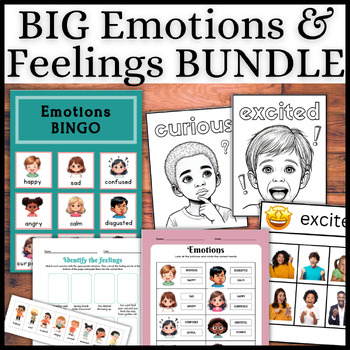
The Emotions and Feelings Activity Bundle includes seven sorting mats and 42 photo cards. The photo cards are what caught my attention here. Start with a small selection and use the cards to invite conversation. Try “What makes you think that?” followed by “Could there be another possibility?”
Make a sorting center with room to explain
Choose two or three mats. Partners take turns placing a card and explaining their choice. If they disagree, let them talk through the clues. You can keep an “I’m wondering” space on the table for cards they want to discuss with you.
For learners who need language support, offer “They might feel…” and a few familiar feeling words. Pointing or choosing between pictures can also be a useful way to join in.
Use a game to revisit the words
The bundle also includes emotion bingo. Model the names before playing, then pause occasionally for a short fictional example: a character has been waiting a long time for a turn, or has just finished a difficult puzzle.
Invite children to suggest a word that could fit. Keep the pace friendly and skip requests for personal examples. The game can give children another encounter with the vocabulary without requiring a public account of their day.
Finish with a character drawing
Use one of the 14 emotion coloring pages, or offer plain paper. Children can invent a character, describe how the character feels, and suggest what the character might say or need next.
The 47-page bundle also contains cut-and-paste activities and identification worksheets. Choose a small amount at a time. A thoughtful conversation about one picture can be enough for today, and the remaining activities will still be there when your class needs another way into the topic.