Ask a room of children to choose a fruit, and someone may campaign very enthusiastically for strawberries. Wonderful. We have opinions, and now we have something to count.
A class fruit vote makes a manageable first graph for kindergarten or first grade. Keep it to three choices, one vote per child, and a question everyone understands.
Give the vote a clear question
Try “Which of these fruits would you choose to draw today?” Show an apple, banana, and strawberry picture. Name each one together before voting. This question lets children participate without needing to have tasted every food.
The 52 Fruit and Vegetable Coloring Pages Bundle from Use The Village includes labeled apple, banana, and strawberry pages among its 25 fruit and 27 vegetable designs. Three selected pages can become picture labels for your graph. Save the rest for another activity.
Build columns children can compare
Place the pictures below three columns on chart paper. Draw equal-sized spaces above them, all starting from the same baseline. Give each child one same-sized sticky note to place in the next empty space above their choice.
Model filling each column from the bottom without gaps. Otherwise, one adventurous sticky note halfway up the chart can make two votes look taller than six.
Use a title such as “Our Fruit Drawing Choices” and add a key: one sticky note means one vote. Read the question again before the final children choose.
Count before announcing the winner
Touch each note as the group counts. Write the total above each column, then ask questions that send children back to the graph:
- “How many votes did the apple get?”
- “Which choice has the fewest votes?”
- “Do any choices have the same number?”
- “How many votes did we collect altogether?”
For children ready to compare differences, match notes across two columns row by row. Count the unmatched notes to find how many more votes one choice received. Keep your finger on the graph while you explain.
Let the graph answer something
Invite children to finish a sentence aloud: “I know ___ because I counted ___.” Pointing and counting together are useful answers, too. The result describes this group’s choices today; another group might choose differently.
Children can draw their selected fruit afterward. They do not all have to draw the most popular choice. A graph is quite capable of holding several opinions at once.
For a smaller group, use two choices and fewer votes. For a follow-up language lesson, try these fruit and vegetable describing-word ideas.
A resource for this activity
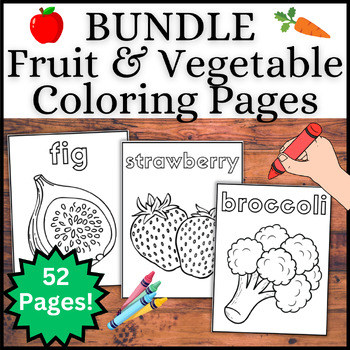
52 Fruit and Vegetable Coloring Pages Bundle
Choose a few labeled fruit pictures as graph headings, then reuse them for vocabulary or drawing conversations.