A chair can live in the kitchen, a bedroom, or beside a very important pile of picture books. That makes household sorting a lovely opportunity for children to explain their thinking.
For preschool, kindergarten, or a supported first-grade group, keep the first round small: two room pictures and a few familiar objects. The useful question is “Where could this go, and what would you do with it there?”
Name the objects first
Show one picture at a time and say its name. Invite children to repeat the word, point to a matching picture, or describe what the object is used for. Model the familiar word after their response: “Yes, you sit on it. It’s a chair.”
Give a quick explanation for unfamiliar items before asking children to sort them. You want to hear their reasoning, and that is much easier when everyone knows what the pictures represent.
Start with two spaces
These Household Items Sorting Mats include nine mats and 54 picture cards. The spaces include a kitchen, bedroom, bathroom, living room, closet, garage, office, backyard, and laundry room. You can use the set for cut-and-paste work or prepare reusable cards.
I’d begin with two familiar spaces and four to six cards. Model a placement, explain your reason, and let each child try one. Keep the remaining cards in a small envelope. Fifty-four objects on the table can turn into a very enthusiastic furniture store.
Listen before correcting a placement
Try “Tell me about your choice” before moving a card. Some objects work in several spaces. If the explanation makes sense, acknowledge it and discuss another possible location.
Homes also have different layouts. Some families share rooms, combine living spaces, or do laundry somewhere outside the home. Present the mats as possible spaces to explore. Children can discuss the pictures without describing their own home.
Add one simple language goal
Choose a sentence frame that fits your learners:
- “This is a…”
- “You use it to…”
- “It could go in the… because…”
Offer pointing, gestures, or a communication device as response options. For a child who needs fewer choices, show two object cards and ask which one could help with a familiar task. Model the answer and try again together when needed.
Turn the final round into a delivery game
Let one partner name a room and request an object from the available cards. The other partner delivers it and explains its use. Swap roles after one turn so both children get to talk and sort.
Finish by choosing one word to revisit tomorrow. You can draw it, find it in a classroom picture book, or use it in a new sentence. For another everyday vocabulary activity, these pretend classroom market ideas give children a different reason to name and describe familiar things.
A resource for this activity
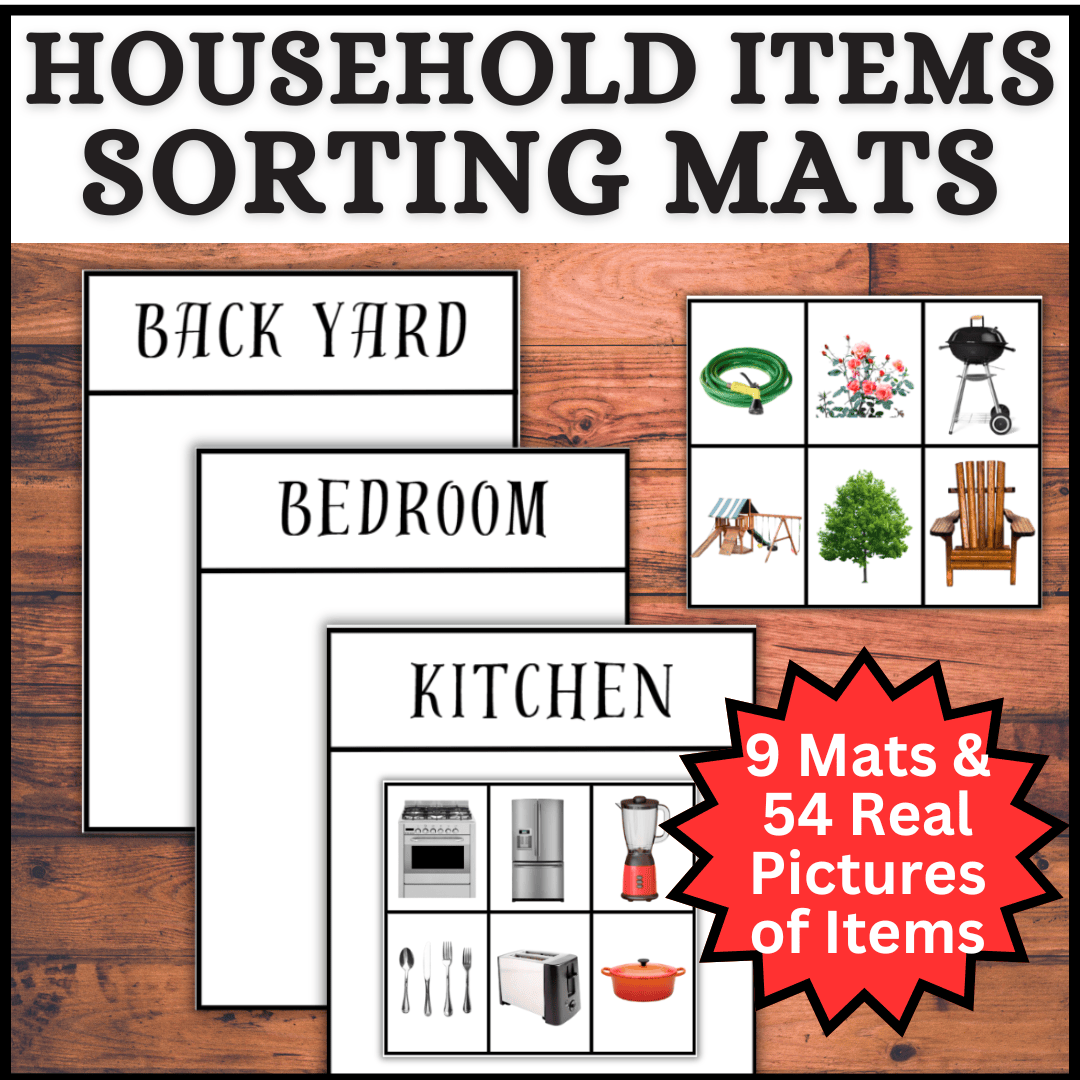
Household Items Sorting Mats | 9 Rooms and 54 Picture Cards
Nine room and space mats with 54 picture cards. Select a few familiar objects for vocabulary practice and supported sorting.