Sometimes the most interesting thing in the classroom is the tiny visitor by the window. Children notice little creatures, and their questions can give you a starting point for a science lesson. Keep a quick list of what they want to know before bringing out an activity.
These insect activities for elementary students combine observation, reading, and a little creative work. You can spread them across a unit instead of trying to fit everything into one afternoon.
Look closely before naming everything a bug
Begin with a clear photograph. Ask children to describe the body, legs, and any other features they can see. Adult insects have six legs and three main body regions: head, thorax, and abdomen. The Smithsonian’s insect educator guide offers background for building the discussion.
Let children draw what they notice and add labels with support. If you observe outdoors, look without disturbing the animal and follow your school’s outdoor-learning routines.
Give a fact a place to go
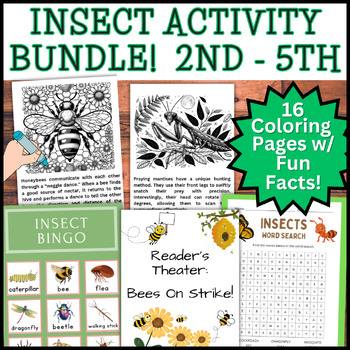
The Insect Activities Bundle includes bug coloring pages with facts, a bonus walking stick page, bingo, a word search, and Bees On Strike! readers theater.
The fact-and-picture combination is a useful find for a short science follow-up. Choose one coloring page that connects to a class question. Read the fact together, then ask students to point to a detail in the picture or explain the fact in their own words. Their finished page can sit beside an observation drawing in a science folder.
Use bingo and word searches for a second encounter
The bingo resource has 15 boards and 24 calling cards. Preview the names first, especially if several pictures look similar. Let partners share a board and take turns locating the called picture.
Use the word search after children have met the words. A useful extra step is to select one found word and explain it to a partner using the lesson materials.
Bring a story into your science week
Read a short part of Bees On Strike! with a supported group. Ask children which details they can connect to their science learning and which belong to the imagined story.
For a butterfly focus, A Caterpillar’s Big Change offers a separate readers theater resource for grades 2–5. Choose the script that matches your current lesson. Finish by returning to the original question list and seeing which questions your class can now answer, and which deserve another look.