Ask a child to describe an ocean animal and you might get “that swimmy one.” Fair enough. We have a starting point!
I like a picture clue game for this moment because it gives children a reason to reach for a more precise word. A partner needs enough information to find the right animal. Suddenly, noticing a shell or describing a shape has a purpose.
Keep the first round small
Choose three clearly different animal pictures and place them where everyone can see. Say each animal’s name together and point to its printed label. Ask what children notice before adding your own observations.
The 30 Ocean Animals Coloring Pages from Use The Village include English vocabulary labels and animals such as jellyfish, oysters, shrimp, whales, and squid. A few pages would work nicely for this game. Save the rest for later rounds so the table stays manageable.
Model one clue that actually helps
Pick a picture silently and give a clue about a feature visible in the drawing. “I can see a shell” works when only one of the three pictures shows a shell. Invite children to point to their choice and explain what helped them decide.
If two pictures match, add another clue. That little puzzle is useful: children can see why “it lives in the ocean” will not narrow down this particular group very much!
Give children a turn as the clue giver
Offer short starters on a reference card:
- I notice…
- Its body looks…
- Look for the animal with…
A child can whisper a clue to an adult, point to a feature for help naming it, or use their usual communication system. Start with two pictures if choosing among three is too much. Partners can swap roles after each guess.
Keep clues tied to what children can see. For facts about how an animal lives, bring in an age-appropriate nonfiction book and check together. A coloring picture can start a question without supplying every answer.
Make a tiny class guessing book
After a round or two, let each child color a page and dictate or write one clue on a separate flap. Attach the flap so a reader can guess before revealing the animal and its label. Check that the clue matches the picture before adding it to the book.
For another way to practice precise describing words, try this sea turtle positional-word game.
A resource for this activity
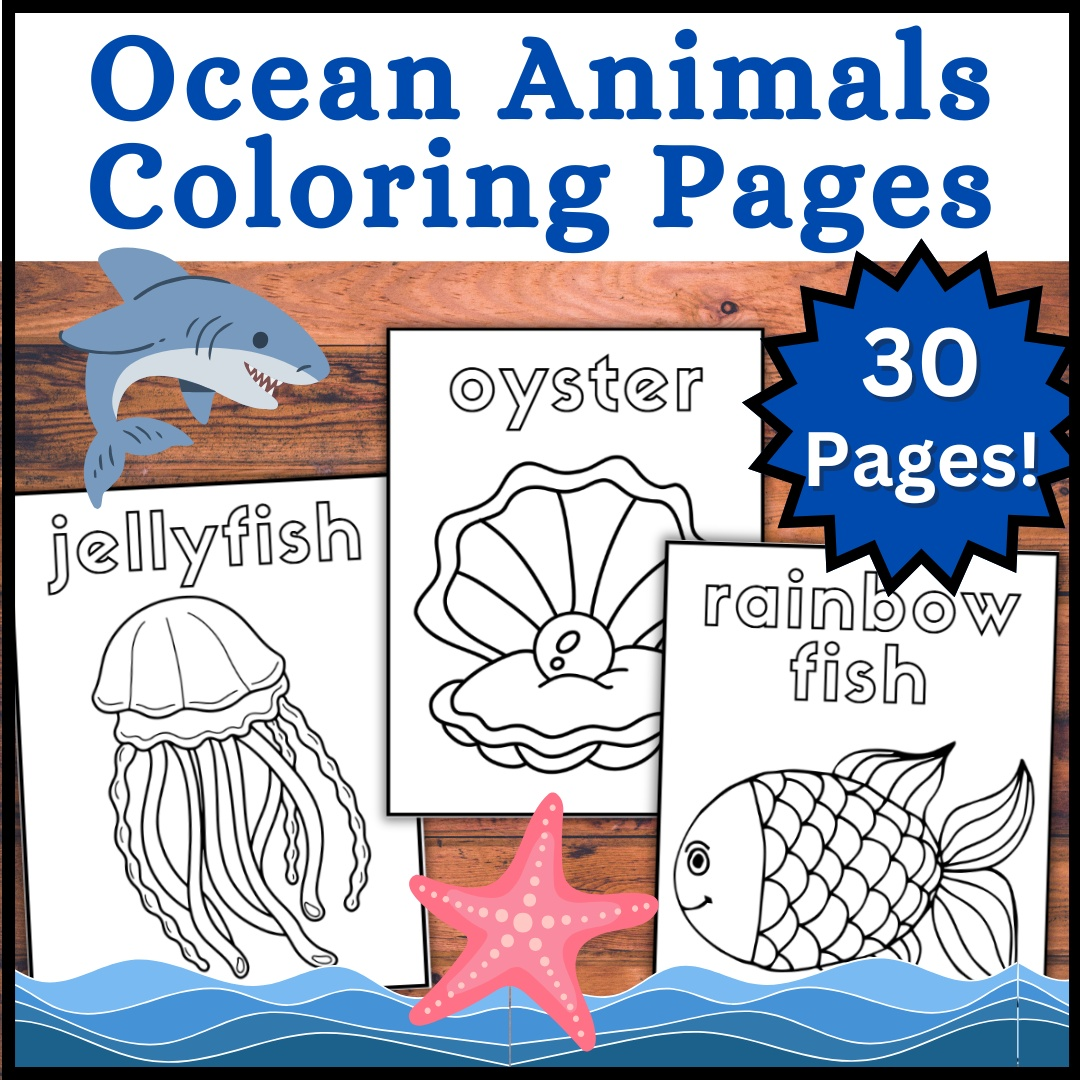 30 Ocean Animals Coloring Pages | English Vocabulary
Choose a few labeled animal pages for the clue game, then add student-made clue flaps.