“But I saw a tiger with a person!” Young children bring excellent evidence to an animal sort. Sometimes the evidence is a zoo visit. Sometimes it is a cartoon tiger wearing trousers. There is plenty to talk about either way.
A wild and domestic animal sorting activity works well in a kindergarten or first-grade small group when children get time to explain a choice. Start with a handful of familiar animals and keep the conversation manageable.
Teach the categories before handing out cards
Explain that domestic animals, such as dogs, sheep, and cows, come from many generations of animals living and breeding alongside people. Wild animals, such as lions and zebras, belong to groups that have not been domesticated.
A zoo animal can receive food and care from people and still be a wild animal. Being friendly, looking fierce, or living indoors will not settle the question. For teacher background, this review of animal domestication explains the difference between an individual animal becoming tame and domestication across generations.
Put out six pictures
The Wild and Domestic Animal Sorting Mats include two mats, 36 picture cards, and an information page. I like having enough cards to change the selection without preparing a new activity. You can use the pictures for cut-and-paste work or prepare a reusable sorting set.
For the first round, choose clear examples such as a dog, cow, sheep, lion, zebra, and tiger. Name each animal together. Model one placement in each group, explaining your reason aloud, then let children try the others.
Give “because” a little help
A child may know where a cow belongs and still need help explaining it. Offer a short prompt: “People have raised cows for many generations, so…” Let the child finish with the category name or point to the matching mat.
Partners can take turns placing a card and checking the choice. Keep both roles brief. One child should not have to watch a friend sort the entire animal kingdom.
Save tricky pictures for a discussion
Some animal names include both wild and domestic forms. Read the resource information and check which animal a picture represents before using it. If a picture is unclear, set it aside for a “Let’s find out” conversation. Children do not need to guess from a photograph alone.
For learners who need extra support, offer two pictures at a time, say the names, and allow pointing or an oral response. Add more cards when the categories feel familiar.
Check one choice before cleanup
Ask each child to choose a card and explain its group with words, a gesture, or a supported sentence. That quick conversation tells you more than a full mat with no explanation.
Continue the topic another day with these farm vocabulary center ideas, especially if children need more practice naming the animals.
A resource for this activity
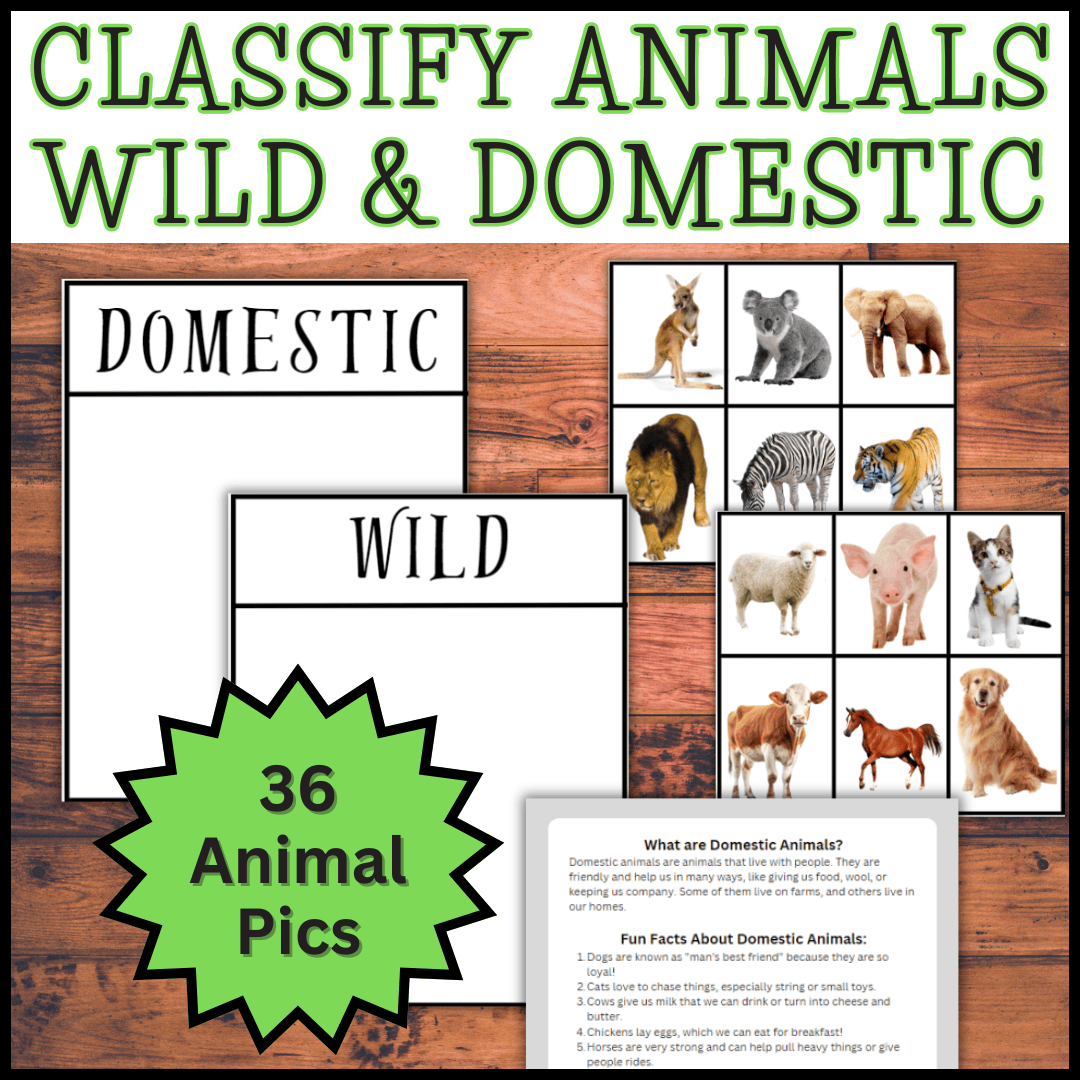
Wild and Domestic Animal Sorting Mats | 36 Picture Cards
Two sorting mats and 36 picture cards let you start small and change the animal selection as children learn.