Ask children how two animals are alike and “They’re both cute!” may arrive before you finish the question. Fair point. Now let’s help them find a similarity they can explain from the reading.
This first-grade animal comparison activity needs just two short animal readings and a sheet of chart paper. You can spread it over two small-group sessions so there is time to read, talk, and think.
Choose a pair with something to compare
Read both texts before the lesson. Look for a shared topic, such as food, movement, or where the animals live. If one passage discusses diet and the other only describes appearance, choose a different pair or provide another short source.
The 79 Animals Around the World Coloring Pages and Fun Facts Bundle gives you plenty of pairs to choose from. It includes regional sets for Asia, Africa, Australia, Europe, and North America, plus a panda bonus page. I like the flexibility of choosing just two pages for a lesson instead of handing out a whole packet.
Read one page and collect one useful fact
Read the first selection aloud while children follow. Stop to explain a word they need, then ask, “What did we learn about this animal?” Write a short note in the animal’s column. Repeat with the second selection.
Keep the notes focused on the same topic. For example, when comparing food, record what each text actually says about food. Leave a question mark when the information is missing. A question mark is a perfectly respectable research result.
Build a three-column comparison chart
Label the columns with the first animal’s name, Both, and the second animal’s name. Model how to move a shared fact into the middle. Ask children to point to the words that support it, or reread the relevant sentence for them.
Distinguish what a picture shows from what the text tells you. Children can notice visible features in an illustration, but an animal’s diet or behavior needs information from a source.
Rehearse the sentence before writing
Let partners try these starters aloud:
- “Both animals…”
- “One difference is…”
- “We still wonder…”
For extra support, offer a choice between two facts and let the child point before completing a sentence together. Children ready for more can write a similarity and a difference, then check both against the readings.
Finish with a small comparison display
Children can color the selected pages after the discussion and place their own comparison sentences between them. Keep the writing visible so the display shares what they learned.
Save other pages for a later pair. If you need a separate independent-work option, this animal facts early-finisher station has a different structure for children who finish before their classmates.
A resource for this activity
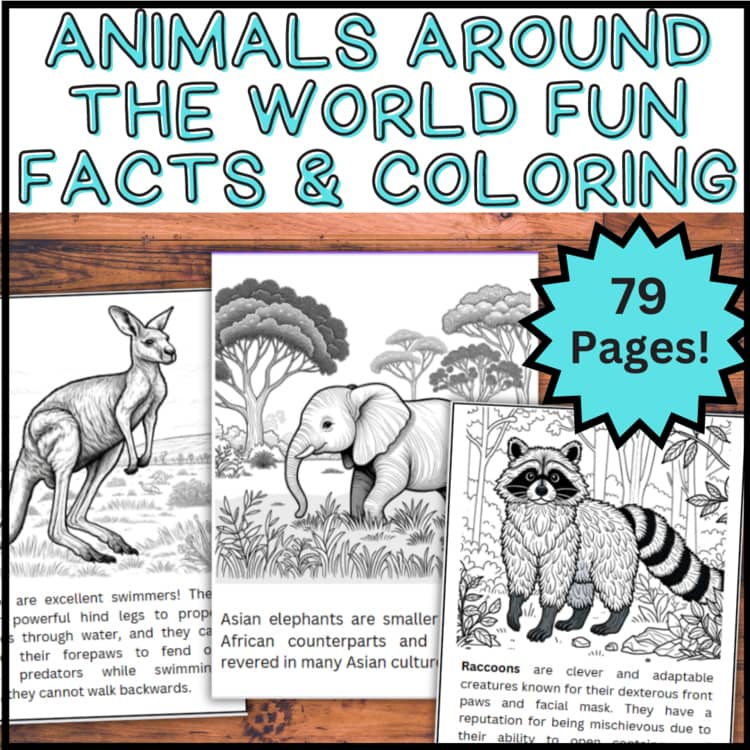
79 Animals Around the World Coloring Pages & Fun Facts Bundle
Choose two pages from this 79-page animal collection for a short, supported nonfiction comparison.