“Does anyone have a question?” A hand shoots up. “I like lions.” Lovely contribution. We may need one more step before the research begins.
A short animal reading gives first graders something concrete to wonder about. Try this small-group routine to help children turn an interesting topic into a question they can investigate.
Start with one animal
The African Animals Coloring Pages and Fun Facts collection from Use The Village pairs animal illustrations with short facts. It includes 15 animal pages plus a cheetah bonus. I like the manageable starting point: one page, one animal, and enough room for conversation.
Choose a page in advance, read it yourself, and gather a reliable animal book for follow-up questions. Read the short facts aloud before handing out crayons so everyone can listen and respond.
Show how a comment can become a question
Write “I like lions” on a chart. Say, “That tells us what you like. What would you like to find out about lions?” Offer beginnings such as “What does…?” “Where does…?” and “How does…?”
Model a simple question about food or movement. Then invite partners to practice asking a question about the selected animal. Children can dictate, draw, or point to a question starter while an adult helps put the thought into words.
Sort questions by where to look
Make two headings: “This page tells us” and “We need another source.” Read each question together and check the text. If the answer is there, point to the sentence that supports it. If it is missing, keep the question for your animal book.
Be comfortable saying, “We have not found that answer yet.” A guess can become a question to check. You do not need to produce an instant wildlife documentary at the reading table.
Record one answer with its source
Choose one question for the next short read-aloud. Help children say the answer in their own words, then write it beside the question with the book title. They can color the animal page afterward and attach their question-and-answer note on separate paper.
Finish by asking each child to share a new question or point to something the group found out. When they are ready to use facts across two texts, this animal comparison activity is a useful next step. Keep today’s chart nearby as a reminder that a good question gives our reading a purpose.
A resource for this activity
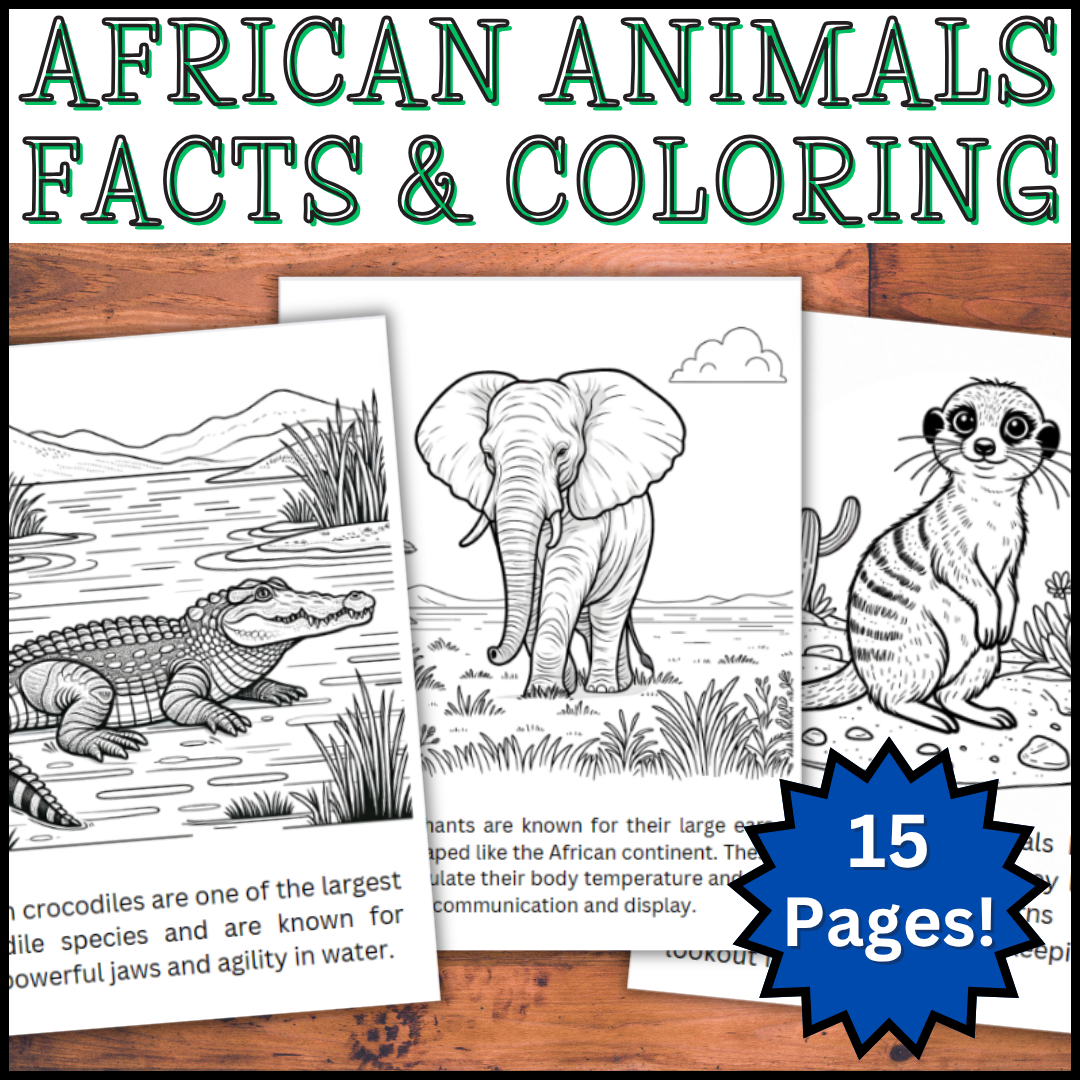
15 African Animals Coloring Pages and Fun Facts
Choose one animal page as a starting point for questions and supported nonfiction reading.