A display full of portraits gives children plenty to look at. A short caption gives the next reader a reason to stop and learn about the person.
This Black history writing activity works during February or alongside a biography at any point in the year. Keep the first caption to one meaningful, accurate sentence. Small writing can carry a lot of information.
Begin with a person and a reliable biography
Choose an age-appropriate biography about someone your class is studying. Read and discuss it before handing out the portrait page. Talk about the person’s work, contribution, and the setting in which they lived.
The 21 Black History Month Coloring Pages from Use The Village provide portraits with names, featuring people from literature, science, civil rights, music, and sports. They could make a useful backdrop for children’s captions. Check that your chosen person is included before planning the lesson.
These are portrait coloring pages, so bring a biography or another reliable source for the historical information. Keep that source close enough to revisit together.
Choose a detail a visitor could learn
Ask, “What should someone learn when they look at this portrait?” Collect a few ideas orally. Help children move from a general comment such as “This person was important” to a specific contribution supported by the book.
Offer a simple frame: “[Name] helped ___ by ___.” Use it only when it fits the information. A straightforward sentence about someone’s work can be just as effective.
Some children will have enough to say for an entire hallway. Let them share their ideas, then help them choose one clear point for this caption.
Say it, check it, write it
Have children tell their sentence to a partner before writing. Return to the source together and check the meaning.
- Did we spell the person’s name correctly?
- Does the source support the detail?
- Have we explained what the person did clearly?
Avoid adding a quotation from memory. A child’s own factual sentence is enough. Add the biography title and author below the display or on a shared “Our sources” card.
Keep the writing accessible
Children can dictate a caption, arrange teacher-prepared words, or write independently. If forming letters is taking all their attention, record their spoken sentence and let them focus on explaining the idea.
Coloring can follow the reading and conversation. Give children time to notice the portrait, while keeping the learning centered on the person’s life rather than how neatly the page is colored.
Read the display together
Pair each portrait with its caption and invite children to read or listen to a few. Ask, “What did this caption help you learn?” Return to these people in later lessons so the display connects with ongoing study.
For a follow-up discussion activity, explore these Black history reading and sorting ideas.
A resource for this activity
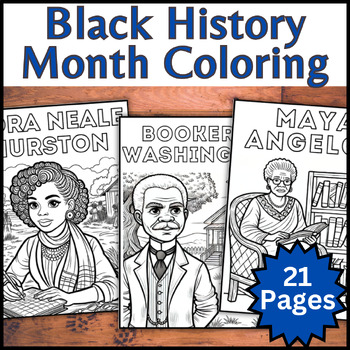
21 Black History Month Coloring Pages
Named portraits to pair with a separately sourced biography and a child-written or dictated factual caption.