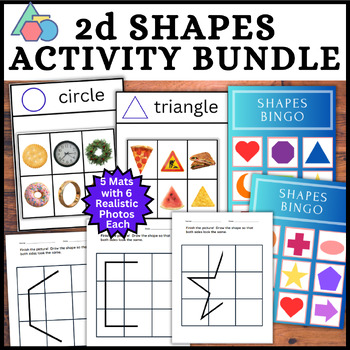
A circle can become a face, a wheel, or the middle of a flower. That is a lovely starting point for a shape lesson because children already have ideas. Give them a few pictures to investigate and a chance to explain what they notice.
These kindergarten shape centers use sorting, a familiar game, and drawing. Start with one center at a time if your class is still learning how to manage shared supplies.
Sort first, glue later
Put two shape mats and a small selection of picture cards on the table. Ask children to place each card where they think it belongs, then tell a partner what helped them decide.
The 2D Shapes Activity Bundle includes five sorting mats and 30 picture cards. This is the part I would pull out first for a small group. You can introduce more choices gradually instead of setting out the whole collection at once.
Encourage children to trace the outline with a finger and describe its features. When a picture is tricky, compare it with another example. Listen for their reasoning before stepping in with the name.
Play bingo with a describing turn
The same bundle includes eight bingo cards and two pages of calling cards. Before showing a calling picture, invite students to describe the shape you name. Keep a model nearby for children who are still learning the vocabulary.
Once the group knows the game, let a child help call a round. A partner can hold the picture while the caller names or describes it. There is room for both children to participate, even if their language skills are different.
Turn one shape into a picture
Choose one of the 15 finish-the-picture worksheets for a drawing center. Show how a single starting shape can lead to several different pictures, then let children decide what theirs will become.
Invite them to explain their drawing before writing a label. You might hear a wonderfully detailed story from a child whose pencil work is still developing. Record a dictated sentence if that helps capture the idea.
Make the cleanup part predictable
Use a tray for each activity and photograph the materials when they are put away correctly. Cards go in one envelope, counters in one cup, and unfinished drawings in a clearly marked folder.
The next day, change the pictures or the shapes while keeping the tray setup the same. Children get another chance to notice and explain, and you get to spend less of the lesson collecting missing cards.