An ocean scene can hold a whale, a crab, and a very busy imagination. Before everyone glues the characters down, leave a little time to move them around and tell a story.
This oral storytelling activity works well with kindergarten or first-grade partners. Children rehearse an idea with pictures before being asked to draw or write it. The glue sticks can wait their turn.
Choose a background and just two characters
I like the storytelling possibilities in Build an Ocean Craft from Use The Village. It includes ocean animal cutouts, portrait and landscape backgrounds, and color and black-and-white options. Children can arrange their own scene, so there is room for different stories.
Prepare the cutouts ahead of time if cutting would use up the whole session. Offer one background and a small selection of animals. Ask each child to choose a main character and one other character. Save the extra animals nearby for a later turn.
Give the story somewhere to go
Model a short imaginary story while moving two animals. For example: “A crab wanted to find a quiet spot. A fish showed the crab a place beside a rock. The crab settled down.” Explain that you are making up a pretend story.
Then offer three prompts, one at a time:
- Start: “Who is your story about?”
- Something happens: “What does your character want to do?”
- Finish: “How does it turn out?”
A tiny event is plenty. A character can find a friend, look for a place to rest, or decide where to play. Every ocean story does not need a dramatic rescue.
Make the partner a listener
One child moves the animals and tells the story. The partner listens, then says one thing they remember. Give a simple starter: “I remember when…” Swap roles after the short retelling.
If a story becomes a list of animal names, return to one character: “What did this one do?” If it keeps growing, ask, “What happened at the end?” Keep the prompts light enough that the story still belongs to the child.
Offer a way in for every storyteller
Children can move a character, point, use their usual communication system, or tell a partner what to say. An adult can narrate a movement and pause for the child to add or change something. Two connected actions are a useful starting point.
For a child ready to write, invite one sentence about the most important event. Others might dictate a caption or draw the beginning and ending on separate paper.
Glue one moment worth keeping
After telling the story, children can choose one scene to glue down. Ask which moment they chose and record a short caption. Display the finished scenes with those words so visitors have something to read as well as admire.
If your group needs to learn the animal names first, try this ocean animal vocabulary game before opening the storytelling center.
A resource for this activity
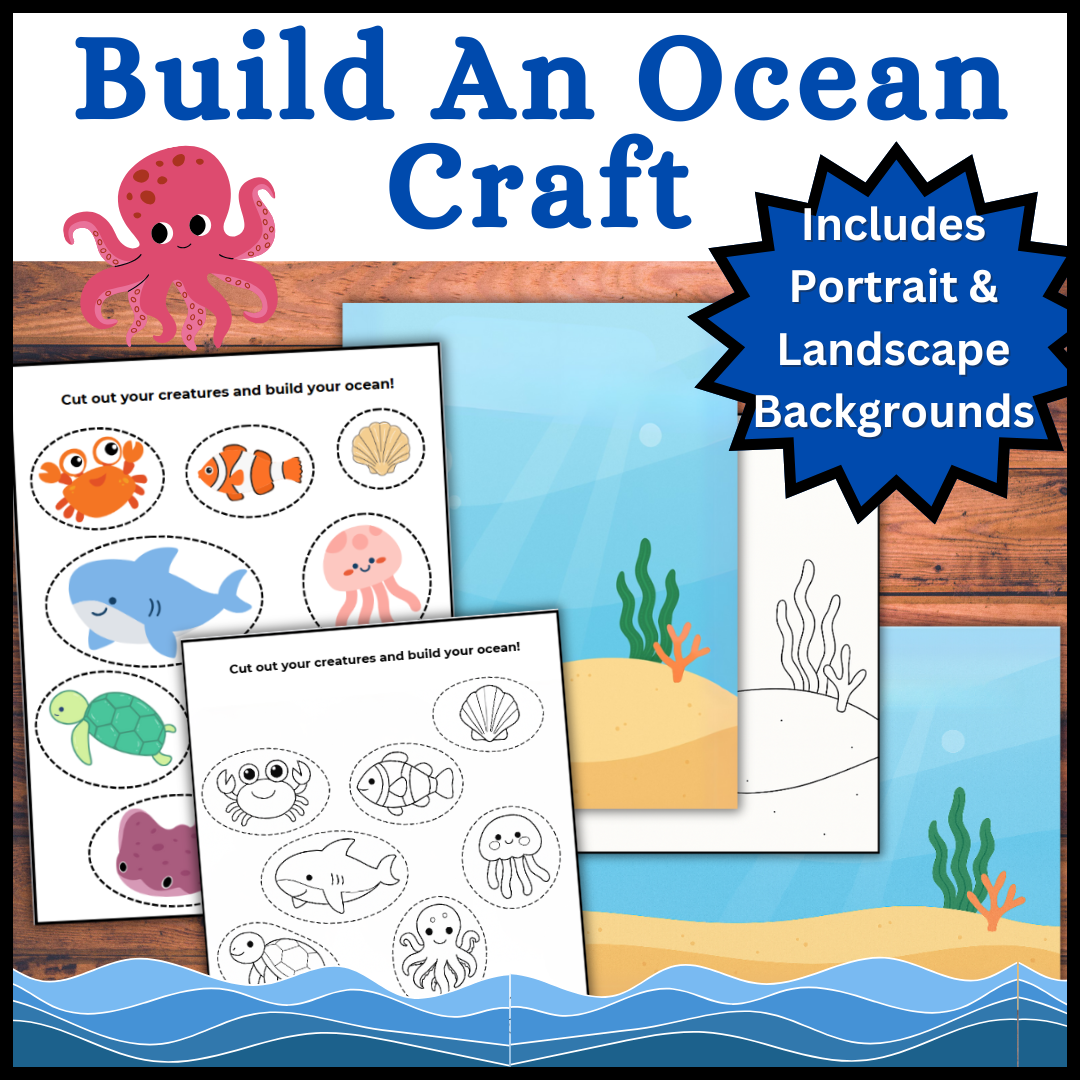
Ocean backgrounds and animal cutouts for arranging a scene, rehearsing a story, and creating a final picture.