A child writes “whale” beside a picture and looks up, ready to announce the writing is finished. That label is useful! When your lesson goal is a complete sentence, it also gives you a place to begin.
Try a short ocean writing activity that adds one thought to an animal name. Keep the sentence small enough for the child to say and reread.
Start with a picture and its name
The 30 Ocean Animals Coloring Pages pair animal pictures with English vocabulary labels. The collection includes animals such as jellyfish, oysters, shrimp, whales, and squid.
Choose a few pages, read the names aloud, and let each child select one. Provide separate paper for the sentence. The printed animal name can serve as a spelling reference.
Say a whole thought together
Model the difference in purpose by pointing to the label, then saying a sentence: “I see a whale.” Explain that the label names the animal and the sentence tells a thought about the picture.
Offer the frame “I see a ___.” Read it aloud with the child and check that the wording fits the selected label. Help with singular forms or “a” and “an” as needed instead of asking children to force every printed word into the same gap.
Children ready for another structure can try “This is a ___.” Let them say the whole sentence to a partner before picking up a pencil.
Add a detail the picture supports
Once the first sentence is secure, ask what the child notices in the illustration. They might describe a visible feature or, after coloring, a color they chose.
Make that distinction clear: “My whale is purple” can describe a child’s artwork. It does not need to become a fact about real whales. Purple crayons have big ambitions.
For factual animal writing, use a reliable text to check the information together. This lesson can stay focused on describing the picture.
Reread with one small check
Ask the child to point along as they reread. Do the written words match the sentence they said? Help add a missing word, then check the opening capital and ending punctuation at a level appropriate for the learner.
Some children may dictate while an adult writes, arrange teacher-made word cards, or write part of the sentence independently. Keep the oral rehearsal available for everyone.
Share the sentence with a reader
Pair the picture and writing for a small class book. Have each child read their page to a partner or familiar adult.
For more practice keeping useful picture words within reach, try the personal picture dictionary activity. A familiar label can help a writer start; a spoken thought helps them decide what comes next.
A resource for this activity
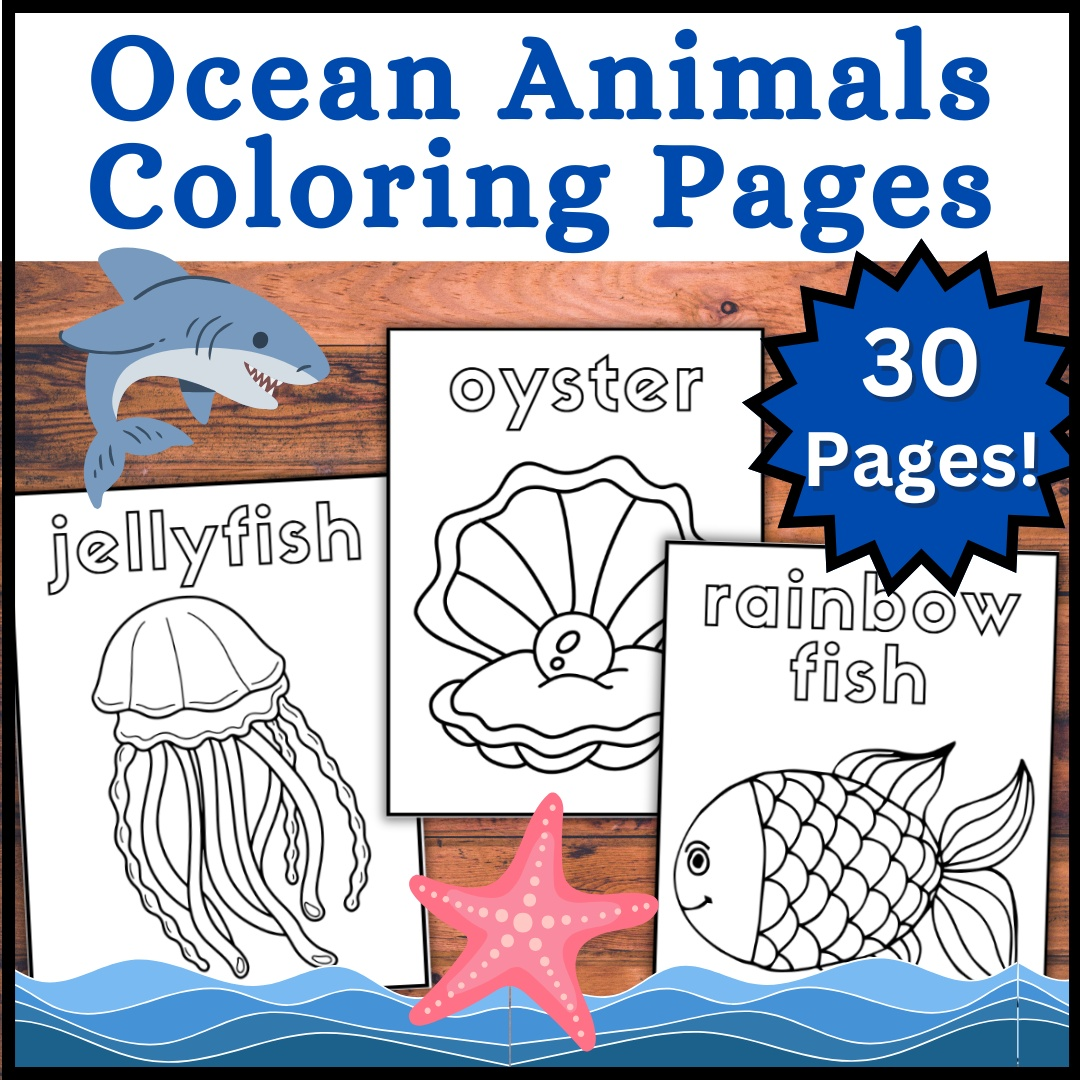
30 Ocean Animals Coloring Pages
Use a labeled animal picture as a word reference, then write a sentence on separate paper. Includes 30 ocean animal coloring pages with English labels.