A few well-chosen words can fill a surprisingly useful language lesson. Children get time to hear them, try them, and use them again before a new set arrives. Keep the first activity small enough that everyone can join in.
For beginning Spanish vocabulary, I found two printable options that would fit nicely into a short classroom routine. One gives you reusable cards; the other provides a focused cut-and-paste follow-up.
Pick a small set of color words
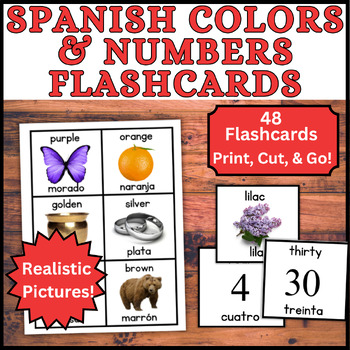
The English–Spanish Colors and Numbers Flashcards include 48 cards across eight printable pages. Start with three or four colors and a few classroom objects that match them.
Model the words and invite children to point to a matching object. Then let partners take turns choosing a card while the other partner finds something in that color. Use a reliable pronunciation model as you introduce unfamiliar words.
Keep the cards visible during the activity. A learner can look, listen, and try the word again without needing to remember everything immediately.
Add numbers when the group is ready
The number cards range from 1–20 to larger numbers, including selected tens. Choose a few numbers your learners can represent with classroom objects.
Show a card, build the quantity together, and count aloud. Partners can take turns placing counters and checking the amount. You do not need to introduce every card simply because it is included.
Try five animal words in a separate lesson
The Spanish Animal Vocabulary Matching Worksheet focuses on león, pájaro, perro, elefante, and caballo. Children match labels to pictures of a lion, bird, dog, elephant, and horse.
Name the pictures together before scissors come out. Have children place the labels without glue, point to their choices, and say the words with support. Glue can wait until they have had a chance to check the matches.
Color and black-and-white versions are included. Choose one version for the activity and save the other if it serves a later purpose.
End with a tiny review
Before putting the materials away, show two familiar cards and ask children to name, point to, or match one. Use what you notice to choose tomorrow’s words.
A labeled envelope for each small set keeps the next lesson easy to start. Revisit the same words in another short game before expanding the collection.