The birthday card has three hearts, seven stars, and a cake with impressive candle coverage. There is just one small mystery: who is it from?
Cards give young writers a lovely reason to reread. Someone will actually open this paper! A short reader check helps children notice the words that make their message clear.
Start with a real reader
Choose a recipient children know, or let them practice with a pretend recipient. Follow your classroom’s approach to birthdays and offer another kind of friendly note for children who do not celebrate them.
The 10 Printable Birthday Cards have blank interiors, so children can compose their own messages. The set includes five full-color designs and five black-and-white designs to color. A ready-made front leaves the writing space open for the child’s words.
Before writing, ask, “Who will open this? What would you like to tell them?” A partner can listen while the writer tries out one sentence.
Teach three small checks
Draw three simple reminders on the board: a person, a speech bubble, and a pencil. Use them for these questions:
- Who is this for? Include a name or greeting that helps the reader know.
- What do I want to say? Read the message aloud and listen for the thought.
- Who wrote it? Add a signature so the reader can thank the right person.
Model with a quick pretend message: “Dear Sam, I hope you have a fun birthday!” Read it aloud, then pause. “Sam will know this is for them. They will hear my wish. What do I still need?” Add your name.
Keep the focus small. Children can practice one useful writing habit without turning their card into a page of corrections.
Try a gentle partner check
Have the writer read their own card to a partner. This works even when a child’s spelling still needs an adult’s help to interpret.
The partner listens for the recipient, message, and writer’s name. Teach a friendly prompt: “Can you show me where you signed it?” A partner can help someone notice an omission without taking over the pencil.
If a child says more than they wrote, ask, “Would you like to add that part?” Sometimes the spoken message is the exact sentence they were trying to capture.
Make room for different writers
Some children may write a name and draw a message. Others may dictate a sentence, use a word bank, or write several lines. Offer words such as happy, birthday, hope, and from, plus the recipient’s name.
Keep the child’s wording whenever possible. “I hope you get a giant cupcake” has a certain charm that “Best wishes on your special day” simply cannot compete with.
Finish with one useful change
Ask each writer to make one change that helps the reader: add the name, finish a thought, or include a signature. Then fold the card and deliver it through your usual classroom process.
You can reuse these three questions for thank-you notes and friendly letters. For materials and a simple ongoing setup, see the classroom birthday card writing station.
A resource for this activity
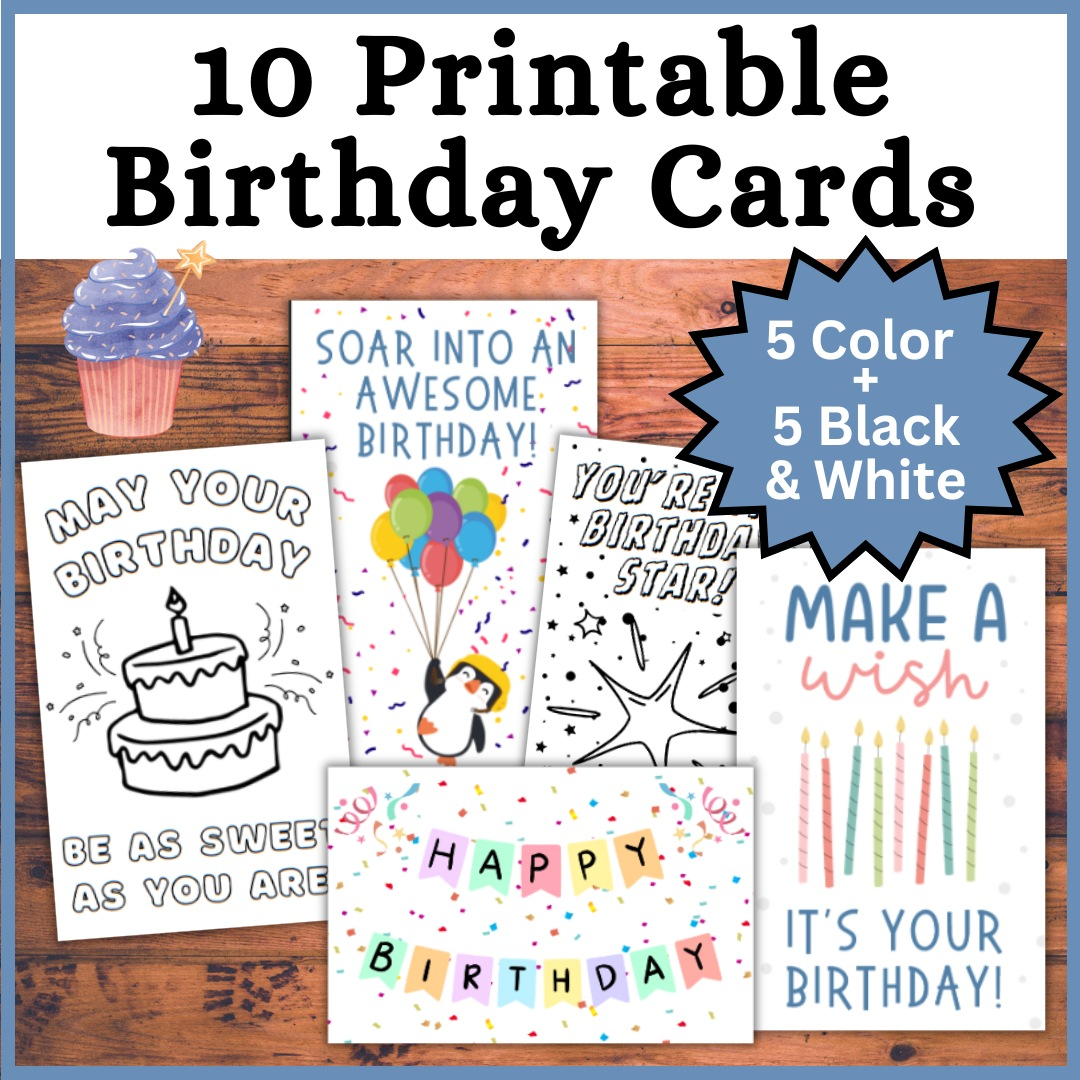
Five full-color and five black-and-white designs with blank interiors for children’s own messages. Use the blank space to practice a greeting, a thoughtful sentence, and a signature.